Scenario analysis in action: A step-by-step walkthrough using the TCFD process map
Scenario analysis in action: A step-by-step walkthrough using the TCFD process map
Recently, we explored the basics of climate-related scenario analysis, clarifying its role in AASB S2 compliance and how it aligns with Corporations Act obligations. We also outlined the various types of scenario analysis and their importance in assessing climate resilience.
This article takes the next step: moving from theory to practice. Using our scenario development process map, we’ll walk through the key stages of building and applying scenarios based on the Task Force on Climate-related Financial Disclosures (TCFD) Guidance on Scenario Analysis for Non-Financial Companies. This guidance is specifically referenced in AASB S2 Climate-related Disclosures (see footnote in paragraph B1), and we follow it when performing scenario analysis for our clients.
Our goal is to make scenario analysis accessible and practical for organisations looking to strengthen their climate response. That’s why we’ve developed BDO’s scenario development process map, a clear, step-by-step guide to applying the TCFD scenario analysis guidance in real-world settings.
Think of this map as your guide on the journey. Each step is designed to help you ask the right questions, involve the right people, and make decisions grounded in both the TCFD framework and AASB S2 requirements. As you work through the process, refer back to this map to keep your scenario analysis focused on what matters most for your organisation.
The scenario development process map

The following steps are based on the TCFD Scenario Analysis Guidance (2020), adapted for practical application.
Ensuring organisational requirements for scenario analysis
Before diving into the steps, it’s worth pausing to think about your organisation’s unique context. Who needs to be involved? What governance or processes are already in place? Early engagement with the right people ensures your scenario analysis is meaningful and aligned with your strategic goals. With that in mind, let’s walk through the scenario development process map, which brings the TCFD guidance to life in a practical, step-by-step way.
Step 1: Assess the external environment
A good starting point is to take stock of what’s happening around your organisation. This means looking at past and current trends, as well as your existing climate risks. By considering the broader context - like regulatory changes, shifts in the market, or new technologies - you’ll ground your scenario analysis in reality and focus on the risks and opportunities that matter most.
Step 2: Formulate the focal question and define time horizons
Once you’ve set the scene, it’s time to get specific. Start by framing a clear focal question - something like, “How could climate-related risks affect our organisation?” Or, you might choose a more specific question to focus the analysis on key aspects you want to explore. Next, decide on the time horizons you want to consider (short, medium, and long term). This helps you focus your analysis and ensures you’re considering both immediate and future possibilities.
Step 3: Identify, rate, and rank driving forces
To structure the identification of driving forces, the TCFD guidance recommends using the STEEP framework - Social, Technological, Economic, Environmental, and Political factors (see Figure A2-5).
Start by listing the key “driving forces” - the big-picture factors that might influence your scenarios.

Figure A2-5 STEEP Model of Driving Force (page 77)
For each driving force, ask:
- How relevant is it to your focal question?
- Could it have a positive or negative impact? Is the financial impact high, medium or low?
- How uncertain is its future direction? Is it high, medium or low?
These last two questions form the basis of your rating and ranking. Once you’ve assessed impact and uncertainty, you can prioritise the forces that matter most for your analysis.
Step 4: Develop and draft scenario narratives
Now that you’ve identified and ranked your driving forces, you can start building your scenarios. Begin with a baseline scenario—this uses the high-impact, low-uncertainty drivers (the trends you’re pretty sure will happen). Then, create alternative scenarios by incorporating the high-impact, high-uncertainty drivers - the “what ifs” that could really change things.
For each scenario, draft a short narrative that describes how these driving forces might play out over time, how they could interact, and what outcomes might result. As a starting point, we suggest two scenarios aligned to the Corporations Act requirements:
- A low warming scenario (i.e. 1.5°C), representing strong global climate action.
- A high warming scenario (i.e. 2.5°C or higher), representing limited or delayed action.
As you progress to a more sophisticated approach, you can add additional scenarios and use tools like this 2x2 matrix to organise your scenario themes and pathways. This matrix helps you visualise how different combinations of high-impact and high-uncertainty drivers interact, making it easier to identify distinct scenario spaces.

Figure A2-6 Scenario 2x2 Matrix (page 77)
Step 5: Quantify, assess quality, and finalise scenarios
Now, try to assign some numbers to key variables in your scenarios. Where possible, try to estimate things like:
- Social, demographic, or economic trends
- Key performance indicators for your organisation or industry
- How markets, suppliers, or customers might be affected
- Impacts on asset values, productivity, revenue, or costs.
Adding these details helps you compare scenarios and makes your analysis more robust.
Next, check the quality of your scenarios. Are they plausible and internally consistent? Do they make sense to your audience - and maybe even challenge some assumptions? Share your scenarios for feedback and refine them as needed, then finalise your set.
Once you’re happy with your scenarios, it’s time to see what they mean for your organisation’s strategy.
Draw conclusions and develop strategy options
With your scenarios finalised, take a step back and ask: What do these stories mean for your organisation’s risks and opportunities? How well do your current strategies hold up? Are there new options you should consider, or warning signs you need to watch for?
Use these insights to shape your strategic planning, so your organisation is ready for whatever comes next.
Step 6: Identify metrics for monitoring
With your scenarios and strategy options in place, it’s important to keep an eye on how things unfold. Start by identifying “signpost” metrics; key indicators that will help you spot when important changes are happening in your operating environment or when uncertainties are starting to shift.
These metrics act as early warning signals, letting you know when it might be time to revisit your scenarios or adjust your strategy. Make monitoring a regular habit, and be prepared to update your analysis as new information becomes available. This way, your organisation stays agile and prepared for whatever the future brings.
How we can help
Every organisation’s climate journey is unique. If you’re looking to turn scenario analysis into practical action, our sustainability reporting specialists can help you navigate the process, interpret the results, and build confidence in your disclosures.
Contact us to discuss your goals, ask questions, or explore how our experience with TCFD and AASB S2 can support your next steps.
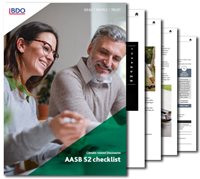 AASB S2 Climate-related Disclosures checklist
Support your climate reporting journey with a structured, step-by-step guide to AASB S2. Designed to help organisations meet Australia’s new sustainability standards with clarity and confidence.