Climate risk assessment: Getting the foundations right for AASB S2
Climate risk assessment: Getting the foundations right for AASB S2
For organisations preparing for AASB S2 Climate-related Disclosures, climate risk assessment is one of the most important parts of the reporting process. It is also one of the areas where the quality of judgement matters most. Identifying climate-related risks and opportunities is not simply about meeting a disclosure requirement. It is about developing a clear, evidence-based view of how climate change could affect an organisation’s strategy, financial performance and resilience over time. When this work is done well, it strengthens the overall quality of reporting and supports better decision-making.
Identification sits at the core of AASB S2
Under AASB S2, organisations are required to disclose climate-related risks and opportunities that could reasonably be expected to affect their future prospects, including cash flows, access to finance and cost of capital.
This requirement means that the identification process is very important. It is not just listing potential risks or opportunities but rather building a clear view of how climate-related factors may influence financial performance. A structured and evidence-based approach is essential. Organisations need to show that they have considered a broad range of risks and opportunities and understand which are most relevant to their business model and outlook.
Bringing structure to a complex exercise
One of the main challenges organisations must face is knowing where to begin. The concept of ‘climate risk’ can feel broad and difficult to define, particularly for those at the early stages of their reporting journey. Having a structured framework can bring clarity. Climate-related risks are typically grouped into physical and transition categories.
Physical risks relate to the impacts of a changing climate, such as extreme weather events or longer-term shifts in temperature and rainfall patterns. These risks can disrupt operations, damage assets and affect supply chains, leading to increased costs or reduced productivity.
Transition risks arise as economies respond to climate change through policy, technology, market and behavioural shifts. These risks can affect demand, pricing, competitiveness, and access to capital.
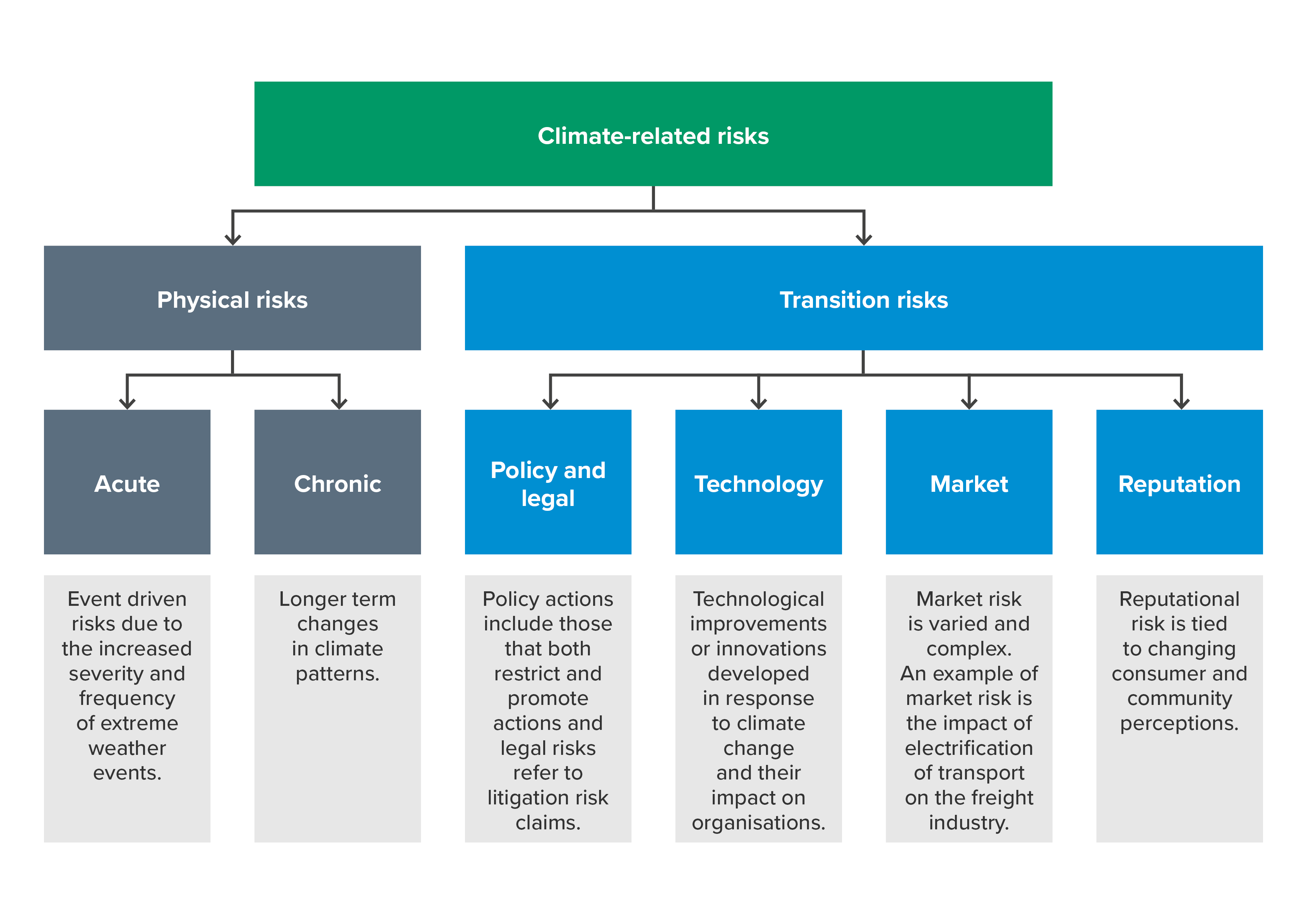
Taking a structured approach helps ensure that all relevant areas are considered and reduces the risk of overlooking material issues.
Looking at the value chain
A climate risk assessment is not limited to what happens within an organisation’s own operations. AASB S2 requires organisations to consider climate-related risks and opportunities across their entire value chain.
This includes suppliers, customers and other external parties that influence how the organisation operates and generates value. In many cases, the most significant exposures sit outside direct operational control. These areas can be difficult to assess because they often sit outside direct management control, but they may still have a significant effect on performance, cost and resilience. Supply chain disruptions, shifts in customer demand, or changes in financing conditions can all have a material impact.
It is also worth considering the broader context in which the organisation operates. This includes how peers are responding, what developments are emerging in the market, and how external factors such as regulation or public sentiment may influence future performance. Taking this broader view often reveals risks that would otherwise be overlooked and provides a more complete understanding of an organisation’s exposure.
The importance of climate science and policy
A credible climate risk assessment needs to be grounded in external evidence. Climate science and climate policy provide the foundation for understanding how physical and transition risks may affect an organisation over time.
There is a wide range of publicly available information that organisations can use to support their analysis. Established sources such as IPCC reports, CSIRO’s State of the Climate reporting, and Australia’s National Climate Risk Assessment provide valuable insights into climate trends and potential impacts. Drawing on these types of sources strengthens the assessment’s credibility and provides a clearer basis for decision-making.
Climate policy is equally important when identifying transition risks. Regulatory requirements, emissions targets and climate-related disclosures vary across jurisdictions and can change over time. Organisations need to consider where they operate, and where their suppliers and customers are located. Understanding these policy settings helps organisations anticipate how costs, demand and competitive dynamics may shift in the future.
Financial impacts
Identifying risks is only the first step in the climate risk assessment process. Organisations also need to consider how those risks may translate into financial impacts.
This is often the most challenging stage, as it requires linking climate-related events or trends to potential impacts on revenue, costs, assets or liabilities. Without this connection, climate risk assessment can remain too high-level to support meaningful disclosure or decision-making. For example, extreme weather events may disrupt operations or supply chains, while regulatory changes may increase operating costs or require new investment. Changes in customer behaviour may also influence demand.
Using scenario analysis and external data can help organisations develop a more robust view of how these impacts may evolve over time. Building this connection between risk and financial impact is critical to meeting the intent of AASB S2 and supporting more informed decision-making.
Climate-related opportunities
While much of the focus is on risk, AASB S2 also requires organisations to consider climate-related opportunities.
These opportunities often arise from the same drivers that create risk. Actions taken to improve efficiency, reduce emissions or strengthen resilience can also deliver cost savings, support new revenue streams or enhance competitiveness.
For some organisations, this may involve developing new products or services. For others, it may be about improving operational efficiency or accessing emerging markets. Considering opportunities alongside risks helps create a more balanced and forward-looking view of the organisation’s position.
Setting the foundation for meaningful reporting
A well-executed climate risk assessment provides more than a list of potential issues — it creates a structured view of how climate-related factors could influence future performance and decision-making. From this starting point, organisations can prioritise the most relevant risks and opportunities, focus their disclosures on what matters, and build stronger connections between sustainability and financial outcomes. This is what makes risk assessment more than a compliance exercise. It gives organisations a clearer basis for judgement, prioritisation and action.
As mandatory climate reporting continues to evolve, the quality of this initial assessment will play a critical role in the overall effectiveness of an organisation’s response. Getting the starting point right supports compliance and enables more informed and resilient decision-making.
How BDO can help
BDO works with organisations to identify and assess climate-related risks and opportunities, strengthen governance and risk frameworks, and improve the quality of climate disclosures. We help organisations link climate considerations to strategy, financial outcomes and decision-making, ensuring that reporting is both compliant and meaningful. We also support organisations in preparing for assurance, enhancing data quality and advancing emissions reporting in line with AASB S2 requirements.
You can also explore our recent webinar on climate risk assessment and AASB S2 for additional guidance and insights.
To discuss how your organisation can strengthen its climate reporting approach, please contact our sustainability reporting team.